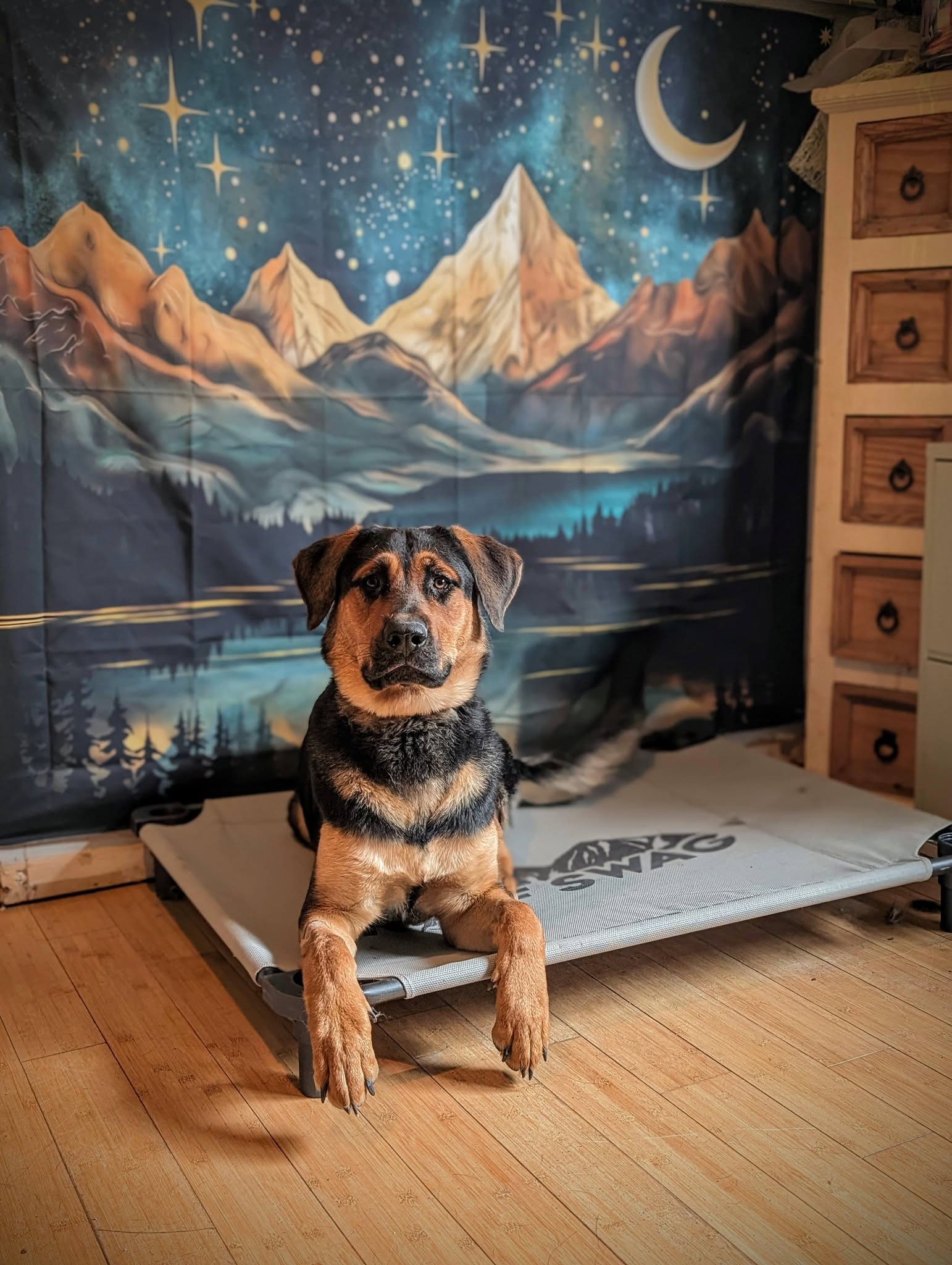
Teach skills that help in ordinary life
The most useful training is not a collection of impressive tricks. It helps your dog understand what to do when the door opens, the leash comes out, or something exciting appears nearby. These essential dog obedience skills support communication and everyday safety, but they work best alongside thoughtful management. A cue should never be your only protection from traffic or another serious hazard.
Begin in a quiet place with rewards your dog enjoys. Teach one small step, reward the result, and stop while learning still feels comfortable. Once a behavior is familiar, practice in slightly different settings. Dogs do not automatically apply a skill everywhere. If your dog struggles outside, make the task easier rather than assuming that a familiar cue is being deliberately ignored.
Skill one: attention and checking in
Attention gives you a way to reconnect before asking for anything else. Say your dog’s name once in an easy setting. When your dog looks toward you, mark the moment with a consistent word and offer a reward. Avoid repeating the name while your dog remains absorbed in something else. Instead, change the setup so the next attempt is more likely to succeed.
Reward the attention you did not request
Notice when your dog voluntarily glances at you during a walk or pauses near you at home. Rewarding those choices helps make checking in worthwhile. You do not need constant eye contact; dogs also need to sniff and observe their surroundings. The goal is an available connection, not a dog who feels unable to look away or explore comfortably.
Skill two: coming when called
Start recall over a short distance with very little competition for your dog’s attention. Use a clear cue, move invitingly, and reward when your dog reaches you. Sometimes release your dog back to a safe activity afterward. If coming always ends the enjoyable part of an outing, your dog may become less enthusiastic about responding. Make arriving beside you a rewarding event.
Increase difficulty gradually and use a safely managed long line where appropriate. Avoid calling repeatedly when you already know the situation is too hard. Move closer or reduce the distraction instead. Never punish your dog after the dog comes to you, even if getting there took longer than you wanted. Protect that final choice to return, while adjusting your next practice attempt.
Skill three: walking with a loose leash
Loose-leash walking starts with teaching where you want your dog to be. Reward a few steps near you while the leash remains relaxed. Use a quiet area before expecting the same behavior on an exciting route. A comfortable walk does not require a formal heel the entire time. You can allow sniffing while still teaching that steady pulling does not move the walk forward.
Make the next step achievable
When the leash tightens, pause if it is safe, or calmly change direction and reward reconnection. Avoid jerking the leash or dragging your dog into position. If every few steps become a struggle, the setting may be too difficult. Choose a quieter route, allow an appropriate sniffing break, and practice a shorter stretch. Progress comes from successful repetitions, not covering a certain distance.
Skill four: waiting and impulse control
A useful wait helps your dog pause before moving through a doorway, approaching a food bowl, or hopping out of a vehicle. Begin with a tiny pause in a safe setting, then reward and give a clear release cue. Keep physical safety in place with a leash or barrier where needed. Do not open access to danger just to test whether training holds.
For a stay, build duration, distance, and distraction separately. If you add several challenges at once, your dog may not understand what changed. Return to reward your dog while the position is still successful, and release clearly. If the dog gets up, reset calmly and shorten the next attempt. The lesson should explain how to succeed rather than make mistakes feel risky.
Skill five: calm behavior around distractions
Calmness is easier to practice when the environment is not already overwhelming. Start at a distance from activity where your dog can observe, respond, and relax. Reward standing quietly, checking in, or settling on a mat. A mat can become a familiar place to rest, but introduce it comfortably at home before expecting it to help beside a busy walkway.
Do not confuse stillness with comfort. Watch for tense posture, fixed staring, or efforts to leave. If your dog seems worried or starts barking and lunging, add distance rather than insisting on a longer sit. Calm observation may mean watching briefly and then moving away. For aggression, bites, or reactions you cannot safely manage, seek professional help instead of arranging more difficult practice.
Keep practice consistent and ask for help early
Agree on cues and reward patterns across your household. Build practice into ordinary routines instead of relying on occasional long sessions. You might reward attention before opening a door, practice a short recall indoors, or teach a comfortable settle while you sit nearby. Keep track of where a skill works and where it becomes difficult. That information helps you choose the next manageable step.
Professional coaching can help when timing feels confusing, progress stalls, or your dog struggles around distractions. Orchard Ridge in Santaquin, Utah, offers private dog training, group dog training, and board and train, with owner coaching in every program and no fixed packages. Discuss the situations you want to improve so the conversation starts with your real life, not a one-size-fits-all list of commands.
Frequently Asked Questions
Which obedience skill should I teach first?
Attention is a helpful starting point because it supports communication. You can also begin simple recall and household routines in an easy, safe setting.
Why does my dog listen at home but not outside?
Outdoor settings add smells, movement, and other distractions. Reduce the difficulty and reward familiar skills in easier environments before expecting them in busy places.
Should I repeat a cue until my dog responds?
Avoid making repeated cues the normal pattern. If your dog cannot respond, adjust the setup, check understanding, and practice an easier version.
Can an adult dog learn these skills?
Yes. Adjust the pace to the individual dog and consider health, comfort, and learning history. Ask your veterinarian about sudden changes or physical difficulty.